An inventor turned investor, and now futurist and professor, Mike Bechtel works to make sense of what’s new and next in tech. His goal: Helping today’s leaders arrive at their preferred tomorrows slightly ahead of schedule.
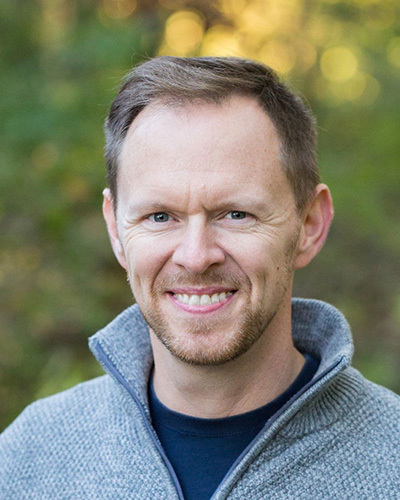
A sought-after keynote speaker, Mike's rare mix of technical understanding, business savvy, and charismatic storytelling finds him giving over 100 keynotes a year to international business, government, and academic audiences. On top of this, Mike also serves as an adjunct professor of Corporate Innovation for the ESTEEM Graduate Program at the University of Notre Dame.
From 2020‑2025, Mike served as Chief Futurist for Deloitte Consulting, founding and directing NExT, a global research studio that advised the boards, C‑suites, and tech teams of the world's most successful organizations. In 2013, Mike co-founded and served as Managing Director of Ringleader Ventures, an early stage venture capital firm. Mike began his career with Accenture Labs, where his team helped Fortune 500 clients put emerging technologies to profitable use. 12 years (and 12 U.S. patents) later, he was named the firm’s first Global Innovation Director.
Mike shares some insight into his professional journey and offers advice to ESTEEM students.
ESTEEM: What was the most surprising or unconventional lesson you’ve learned in your professional journey?
Mike: That breadth is often more valuable than depth—especially in moments of change. Early in my career, I assumed credibility came from knowing one thing extremely well. Over time, I learned that the people who create the most value are often those who can connect ideas across domains, translate between experts, and see second- and third-order effects. In a world shaped by rapid technological change, the ability to integrate knowledge matters as much as the knowledge itself.
ESTEEM: Can you share a pivotal moment in your career when you took a risk or embraced uncertainty, and what you learned from it?
Mike: Leaving a traditional, linear career path to pursue a role focused on “the future” was a leap into ambiguity. There was no clear playbook, no obvious ladder to climb. What I learned is that uncertainty isn’t something to eliminate; it’s something to develop fluency in. Progress often comes not from having the perfect plan, but from being willing to move forward, learn fast, and adapt in real time.
ESTEEM: If you were a student starting the ESTEEM program this year, what would you make sure to focus on learning or doing during the year?
Mike: I’d focus less on optimizing for credentials and more on building range. Learn how technology, business, ethics, and human behavior intersect. Work on real problems with real people. Practice explaining complex ideas clearly. And most importantly, experiment! Try things that might not work. ESTEEM is a rare opportunity to test-drive different futures before you have to commit to one.
ESTEEM: What emerging trends or challenges in your field do you think ESTEEM students should be paying attention to?
Mike: AI is the obvious one, but not just as a tool. The deeper issue is how automation reshapes work, decision-making, and responsibility. Beyond that, I’d watch the blurring of boundaries: between disciplines, between human and machine work, and between global and local systems. The challenge ahead isn’t just technological, but organizational and ethical. Knowing how to navigate that complexity will be a superpower.
ESTEEM: What do you personally learn from working with ESTEEM students year after year?
Mike: I’m constantly reminded how quickly “normal” can be redefined. Students are often more comfortable with ambiguity, more interdisciplinary in their thinking, and more willing to question assumptions oldsters take for granted. Working with ESTEEM students keeps me intellectually honest! It forces me to explain ideas clearly and reexamine my own mental models.
ESTEEM: If you had one piece of advice for students striving to make an impact, what would it be?
Mike: Don’t wait to be “ready.” Impact doesn’t come from having all the answers. It comes from asking better questions and being willing to act before certainty joins the party. Build the habit of learning continuously, connecting ideas generously, and contributing early. The future doesn’t belong to the most credentialed. It belongs to the most adaptable!