Meet Mike Meyer, a Teaching Professor in the Department of Accountancy within the Mendoza College of Business. In addition to teaching Entrepreneurial Accounting for ESTEEM, Mike teaches Financial Accounting and Strategic
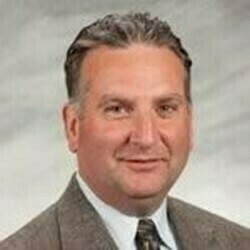
Cost Management for the MBA, EMBA, Master of Finance, and undergraduate programs within the Mendoza College of Business. Mike is the recipient of the 2022 Leo Burke Outstanding Professor Award (Chicago EMBA Program), 2016 and 2021 Rev. Edmond P. Joyce, CSC Award for Excellence in Undergraduate Teaching, the 2016 Frank O’Malley Undergraduate Teaching Award, and the 2016 American Accounting Association Innovation in Accounting Education Award. Prior to coming to Notre Dame in 2010, Mike was an associate professor at Ohio University, where he earned a variety of teaching awards including the 2007 College of Business Teaching and Learning Award and the 2007 and 2009 School of Accountancy Advisory Council Innovation in Teaching Awards. Mike’s current research includes studies in judgment bias, state and local taxation of professional athletes, and a variety of educational and practitioner-related topics.
Mike earned a Bachelor of Business Administration from the University of Notre Dame in 1988, a Master of Accountancy from Virginia Tech in 1993, and a Doctorate of Business Administration from Mississippi State University in 1998. Prior to pursuing his career in academia, he spent three years as a CPA at the public accounting firm BDO. Mike is married and has three daughters. He is also an author of a book on his often-disastrous yet always funny adventures of owning an RV, published in 2022.
Mike shares some insight into his professor journey and offers advice to ESTEEM students.
ESTEEM: What was the most surprising or unconventional lesson you’ve learned in your professional journey?
Mike: In the immortal words of Robert Frost, “Two roads diverged in a wood, and I – I took the one less traveled by, and that has made all the difference.” I was never one to follow the crowd. It is perhaps not surprising when my accounting peers went on to become partners in accounting firms and CFOs of corporations, I chose to become an accounting professor. Do not be afraid to take the road less traveled.
ESTEEM: Can you share a pivotal moment in your career when you took a risk or embraced uncertainty, and what you learned from it?
Mike: When I was at Ohio University, I had just gotten tenured. At the same time our daughters were about to go to pre-school. No offense to Athens, Ohio, but the school system was underfunded and not the best. So, I chose to leave the safety of a tenured job and accepted an untenured teaching professor job at the University of Notre Dame. While some argued that giving up tenure was risky, I bet on myself and followed a dream to be back at the University of Notre Dame (I was a 1988 graduate). Not only did we move to an outstanding school system for my daughters, but as I tell all my students, “I am doing exactly what I want to do, exactly where I want to do it; teaching exactly what I want to teach, to exactly who I want to teach it to. Every day is the best day of my life.”
ESTEEM: If you were a student starting the ESTEEM program this year, what would you make sure to focus on learning or doing during the year?
Mike: Focus on learning the process of developing a business. Lots of good ideas fail to become viable businesses because the entrepreneurs do not focus on the most basic principle: what is the cost to acquire a customer and what is the lifetime value you are getting from that customer. If you can see your business through that lens, you will be focused on meeting a customer need that they are willing to pay for, repeatedly. Oh, and pay your taxes on time.
ESTEEM: What emerging trends or challenges in your field do you think ESTEEM students should be paying attention to?
Mike: I suppose the right answer is AI. However, overreliance on AI may be a bigger problem. As long as AI hallucinates, you are at risk of placing your decision making in a flawed system. I would rather students find a group of experts they can rely on for advice than relying on AI.
ESTEEM: What do you personally learn from working with ESTEEM students year after year?
Mike: There is no greater calling than that of an entrepreneur. You are creating something that creates jobs and wealth where it did not exist before. Being around the ESTEEM students is exhilarating because they want to be in the arena of ideas, willing to put themselves on the line, risking their egos and their cash. I love being around people willing to bet on themselves.
ESTEEM: If you had one piece of advice for students striving to make an impact, what would it be?
Mike: Do not think that a small impact is a meaningless impact. Just because you cannot solve everyone’s problems, does not mean that you cannot solve the problems for some. It is no different from what I have taught my daughters when it comes to charity. A decade ago I set out to raise funds to build water wells in equatorial Africa. After four years, I raised enough for seven wells. When asked how that helps the extreme clean water problem in Africa, my response was that just because I cannot fix the problem for everyone does not mean I should not try to fix the problem for some. Seven villages got clean water wells. Thousands of people’s lives were better. Entrepreneurs can do the same. Your idea does not need to solve huge problems for everyone to be successful.